How do the sickle cell genes cause SCD?
Sickle cell genes affect the production of an important chemical called haemoglobin. Haemoglobin is located in red blood cells, which are part of the blood. Haemoglobin carries oxygen and gives blood its red colour.
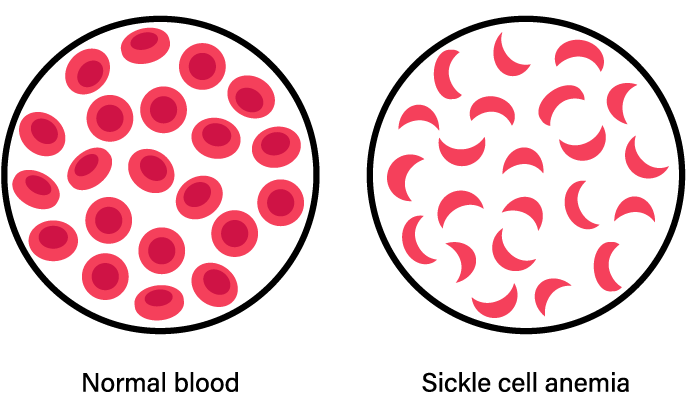
The sickle cell genes make the body produce abnormal haemoglobin called HbS (normal haemoglobin is called HbA). HbS behaves differently from HbA. Under certain conditions, HbS makes the red blood cells change shape – instead of the normal doughnut shape, they become sickle-shaped, like a crescent moon. This is called sickling. Conditions which trigger sickling are cold weather conditions, infection, lack of fluid in the body (dehydration), low oxygen, and acid (acid is produced in hard physical exercise).
Sickle cell trait or sickle cell carrier
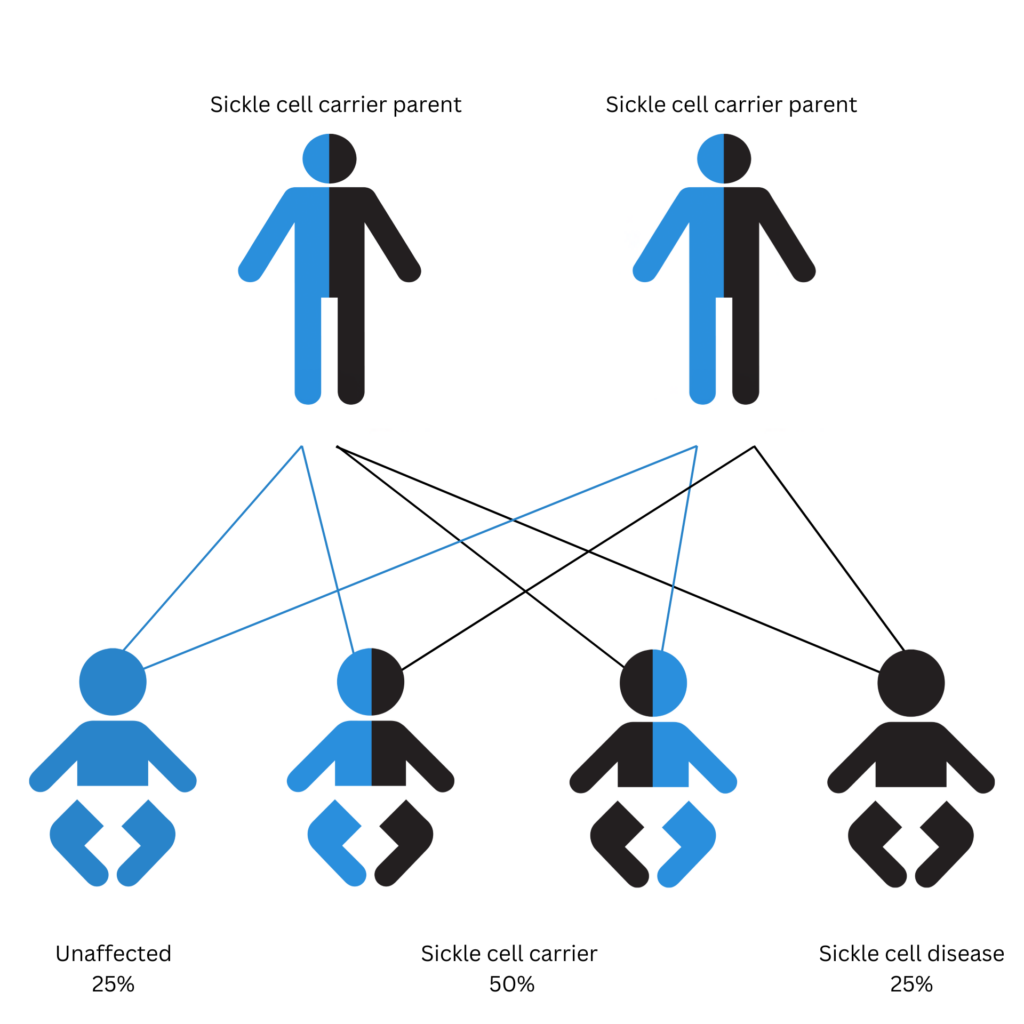
People who inherit the sickle cell trait have inherited one sickle cell gene from one of their parents. The other gene they have inherited is normal. As these individuals can make normal haemoglobin, their red cells do not have the same tendency to go out of shape as people with sickle cell disorders.
Sickle cell trait does not cause anaemia or painful crisis. Their general health is unlikely to be affected by the gene that they carry, apart from very rarely in extreme conditions which affect the amount of oxygen in your body (such as extreme exercise, dehydration or when going under a general anaesthetic). People with sickle cell trait can live a normal and healthy life. It is however important to know that their carrier status will remain the same for life.
The patient should inform all medical/dental staff of their carrier status before they receive any medical treatment to prevent unnecessary blood tests.
More information can be found here Sickle Cell Trait – Hematology.org