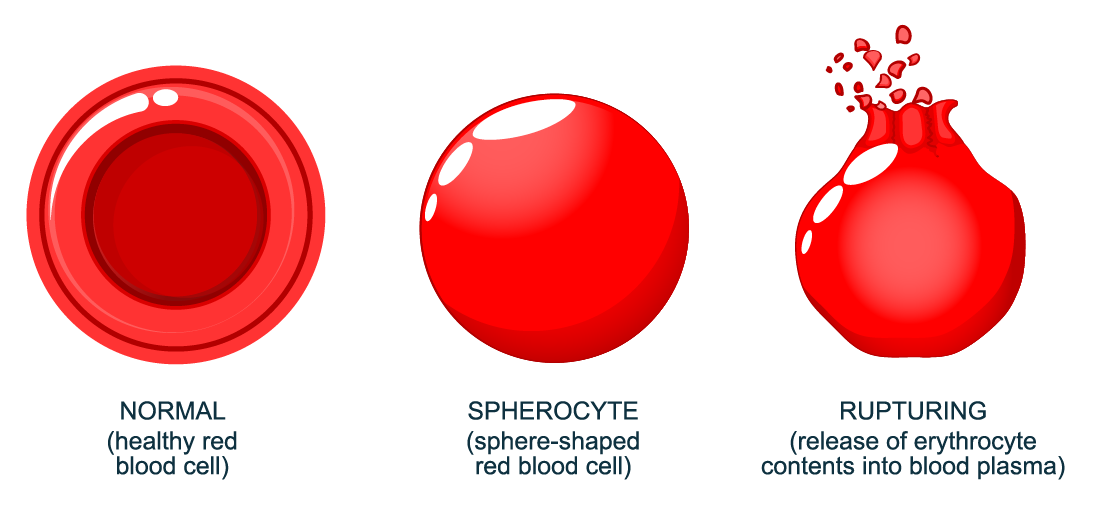

Rare anaemias are a group of genetic conditions which cause the person to not be able to produce red cells effectively, or the red cells they produce may be faulty and destroyed by the body sooner than they should be. Either of these problems results in the person being anaemic. Some people with rare anaemias require regular blood transfusions to control their symptoms.
Some examples of rare anaemias include:
- Congenital dyserythropoetic anaemia (CDA) type 1 and 2
- Diamond Blackfan anaemia
- PK (pyruvate kinase) deficiency
- Hereditary spherocytosis
Some people with rare anaemias have a haemolytic anaemia. This means that the body is destroying the blood sooner than it would normally. This can result in the spleen becoming enlarged, and the person can be jaundiced.